Star Journal d'information en ligne

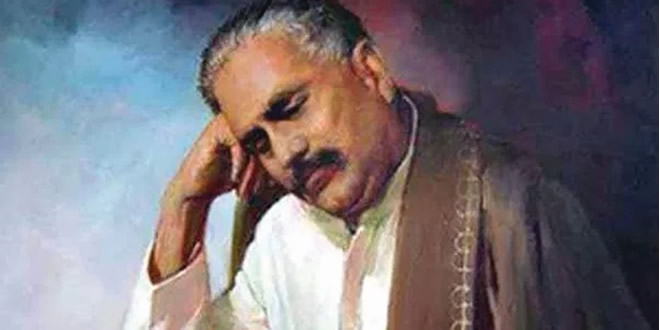
Dr. Sir Mohammad Iqbal – philosopher, poet and reformer – had a profound interest in the moral and intellectual nurturing of youth. Much of his writing was dedicated to this end, and he chose the medium of poetry in Urdu and Persian, which appealed most to the audience of his day, to convey his message.
In one of his verses, he says:
“Shikayat hai mujhe Ya Rab! Khudawandaan-e-maktab se Sabaq shaheen bachchon ko de rahe hain khaak-bazi ka”
“O Lord! I have a complaint against the masters of the school, They teach lessons of ‘playing in the dust’ to children who are by nature are eagles.”
What Iqbal means is that teachers were making eaglets play in the dust instead of teaching them how to fly. It is a critique of an educational system of inferior quality that produces passive people instead of builders of nations.
This is the unfortunate legacy of the colonial system. In Iqbal’s native India, the main purpose of the British curriculum was to “manufacture” clerks and petty accountants to run the administration of the colony. Some European history, often biased, and literature were also taught, the end result of which was to alienate subjects from their own languages and culture. It is deplorable that when erstwhile colonies achieved independence, they perpetuated the same self-defeating system. While efforts have been made in recent times to rationalize and upgrade the system – e.g., the I.B. Montessori and the Socratic method – these are unfortunately not accessible to all.
In a similar vein, Iqbal condemns the traditional schools of religious learning which stifle individual thought and vision through rigidity:
“Gala to ghoont diya ahl-e-madrasa ne tera Kahan se aaye sada La ilaha illa’Allah”
“The scholars of the seminary have stifled your voice, How then can the cry of ‘La ilaha illa’ Allah’ [NO! To false gods] arise from you?”
What Iqbal implies is that the formal, bookish custodians of the madrasa taught religion as fear, rules and rituals. They killed the spirit, self-confidence and passion for critical thinking, for fear of encouraging innovation and of arousing the suspicion of the colonial rulers.
In contrast to such mindsets, Iqbal believed that education must build selfhood, courage and creativity. Selfhood – “Khudi” in his terminology – must grow, not shrink. The concept of self-realization is a major component of his philosophy. He favoured the harmonious development of the heart (implying “Ishq”, the faculty of love) and reason (“Aql”) together, not dry intellect alone.
“At the dawn of creation, Gabriel said to me, Never accept a heart that is enslaved by intellect”
He believed that knowledge must lead to creation, action and service to fellow beings, not just to degrees.
Although Iqbal encouraged the pursuit of excellence in higher education, he did not favour elitism. In his official recommendations for educational policy in pre-partition India, he emphasized the need for technical education for the majority of youth, as this would lead to economic independence and national prosperity. It is significant that in 1920 he refused the offer of the Vice-Chancellorship of the Aligarh Muslim University, convinced that the need of the hour was skilled technicians and artisans rather than cohorts of B.A. degree holders for government jobs. Though a poet – besides being a barrister and politician – he was not a dreamer. The practical side of his mind is shown in his own words:
“I do not know the tales of wine, cup and goblet, Don’t ask a stone-breaker [an awakener of men] to do the work of a glass-blower”
Iqbal believed that education should awaken “shaheen” qualities in young people. The “shaheen”, a peregrine falcon, is a recurrent and powerful symbol in his poetry. It is not a scavenger, does not eat dead prey, lives on high cliffs, flies alone, hunts its own food and is far-sighted. Iqbal wants young people to acquire qualities symbolized by this bird: self-respect and dignity, self-reliance, constant effort, relative isolation from the habits of the herd and high aspiration.
As he exhorts the youth:
“Tu shaheen hai, parwaz hai kaam tera Tere saamne aasman aur bhi hain”
“You are a Shaheen, to soar is your destiny, There are still more heavens waiting for you.”
“Sabaq phir parh sadaqat ka, adalat ka, shuja’at ka Liya jayega tujhse kaam duniya ki imamat ka”
“Learn once again the lesson of Truth, of Justice, and of Courage, For you shall be called upon to lead the world.”
Although Iqbal lived and wrote over a hundred years ago, his work has been a source of inspiration for successive generations. In an era of A.I and rote learning, Iqbal’s call for a falcon-like education is more urgent than ever.
By Dr. Abdullah H. Salehmohamed