Star Journal d'information en ligne

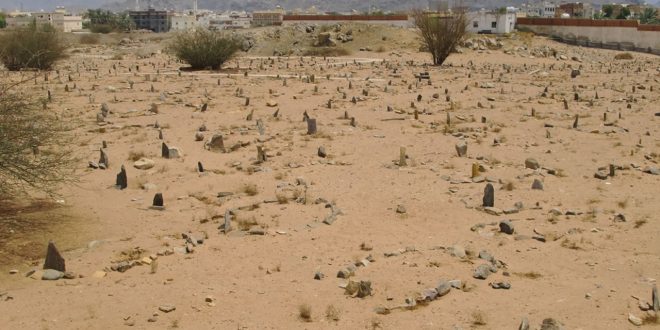
On the 17th of Ramadan, 2nd Hijri, the Battle of Badr took place. It was the first battle in Islam and remains a significant event in Islamic history.
The Battle of Badr is referred to in the Qur’an as the “Day of Furqan.” In Arabic, Furqan means “to separate” or “to distinguish,” as on that day, Allah clearly distinguished truth from falsehood.
ISLAMIC STRUGGLES PRIOR TO THE BATTLE OF BADR
Rasulullah ﷺ was born in Makkah. Before the spread of Islam, Makkah was steeped in idol worship, with the Ka‘bah housing 360 idols. Society was deeply tribal, with rampant oppression, injustice, and moral corruption. The rich exploited the poor, and women had little to no rights. Blood feuds, gambling, and alcohol consumption were widespread, creating a society in desperate need of guidance.
At the age of 40, Rasulullah ﷺ began preaching Tawheed (the Oneness of Allah), first privately and then publicly. The Quraysh opposed him, fearing a loss of power and status. Muslims, especially the weak and poor, suffered severe persecution. They endured brutal torture, with HazratSumayyah (RA) becoming the first martyr. Even noble and wealthy Muslims faced hardships.
To escape persecution, some migrated to Abyssinia, while others endured a three-year boycott in the valley of Shi’b Abi Talib, leading to starvation. Soon after, Hazrat Khadijah (RA) and Abu Talib passed away, deepening Rasulullah’s ﷺ grief. Seeking new support, he ﷺ traveled to Ta’if, but was rejected and stoned.
Islam spread in Madinah, leading to the Pledge of Aqabah. As persecution worsened, Rasulullah ﷺ allowed Muslims to migrate to Madinah. The Quraysh plotted to kill him, but he miraculously escaped, marking the beginning of the Hijrah. Humiliated by his safe arrival, the Quraysh intensified their hostility, vowing to destroy Islam. The hostility towards the Muslims lasted for 13 years.
THE BATTLE OF BADR
THE CARAVAN OF ABU SUFYAN
In the 2nd year of Hijrah, news reached Rasulullah ﷺ that Abu Sufyan, a Qurayshi leader, was returning from Syria with a caravan full of wealth and goods. The caravan was set to pass through Madinah. Some narrations mention that the caravan consisted of 1,000 camels with only 40 armed guards. The Quraysh had never had such a large caravan in recent history.
The net worth of the caravan was estimated at 50,000 gold dinars in modern-day terms. Ibn Ishaq mentions that almost every household in Makkah had an investment in that caravan, making it their primary source of income.
SETTING OUT TO INTERCEPT THE CARAVAN OF ABU SUFYAN
When this news reached Rasulullah ﷺ, he immediately gathered the Sahaba and said: “We have a mission to undertake, so whoever has his animal ready should come with me.” According to Sahih Muslim, Rasulullah ﷺ did not initially reveal the mission’s purpose.
According to the version of Ibn Is-haq, Rasulullah ﷺ said: “This is the caravan of the Quraysh coming back to you, and it contains their wealth. Let us go out to meet it; perhaps Allah will grant it to us.”
NO INTENTION FOR BATTLE
Rasulullah ﷺ and about 315 Muslims set out to intercept the caravan on the 12th of Ramadan. They had no intention of engaging in battle; their goal was simply to reclaim the wealth they had lost when they migrated to Madinah. None of the Sahaba wore armor. The entire army had only two riding horses and fewer than 100 camels.
It was not assumed that they would need fast-riding horses or a large number of camels.
FIRST ENCAMPMENT
As they marched from Madinah, Rasulullah ﷺ assessed those who had joined him. Two youngsters below the age of 14 were deemed too young to participate and were sent back to Madinah. The remaining Sahaba totaled around 313, comprising 83 Muhajirun and approximately 230 Ansar.
Three Sahaba shared each camel, taking turns to ride. Even Rasulullah ﷺ shared a camel with Hazrat Ali (RA) and Hazrat Abu Lubabah (RA).
ABU SUFYAN LEARNS ABOUT THE MUSLIMS’ PLANS
Abu Sufyan took extra precautions with the caravan, sending spies ahead to monitor any threats. He eventually discovered that he was being tracked when he found camel dung containing date seeds, which he recognized as food from Madinah. Realizing that the Muslims were nearby, he panicked and altered his route to bypass Madinah entirely. At the same time, he sent Damdam ibn Amr al-Ghifari on the fastest camel to Makkah to request reinforcements.
Damdam arrived in Makkah in a dramatic manner. He cut off the nose and ears of his own camel, smeared its blood all over himself, and rode it backward while shouting that the caravan was under threat from Muhammad ﷺ and his companions.
THE QURAYSH RESPOND WITH AN ARMY
This alarmed the Quraysh, especially the wealthy merchants whose fortunes were at stake. The Quraysh leaders quickly convened and decided to immediately mobilize a massive army of 1300 men, including their most skilled warriors like Abu Jahl, Utbah ibn Rabi’ah, and others.
They set out towards Badr with 100 horses, over 600 suits of armor, and around 700 camels. They also brought along singing girls who would beat drums, dance, and display the pride of the Quraysh to boost morale.
ABU SUFYAN COULD ESCAPE THE MUSLIMS
Meanwhile, Abu Sufyan successfully took a different route and escaped the Muslims’ interception. He then sent another messenger to the Makkan army to inform them that their belongings were safe and they could return home.
THE QURAYSH REFUSE TO RETREAT
Once the envoy reached the Makkan army, some Quraysh leaders, like Utbah ibn Rabi’ah, argued that they should return to Makkah since there was no longer a need to fight. However, Abu Jahl insisted on continuing, declaring: “We must go to Badr, celebrate, and show our strength so that the Arabs will always fear us.”
Also, shaytan appeared to them in the form of a man named Suraqah ibn Malik, a well-known chief of the Banu Kinanah tribe. He reassured the Quraysh that they had nothing to fear and promised his support, saying:
“No one can overcome you today, and I am with you!”
His words convinced the hesitant Quraysh to proceed.
However, some tribes, totaling 300 to 350 men, decided to return to Makkah as they had no interest in fighting. This reduced the Quraysh army to about 1000 men.
KNOWLEDGE OF WAR
On the 15th of Ramadan, two days before the Battle of Badr, when Rasulullah ﷺ arrived on the outskirts of Badr, he sent Hazrat Ali ibn Abi Talib (RA), Hazrat Zubair ibn al-Awwam (RA), and HazratSa’d ibn Abi Waqqas (RA) to scout the area.
At the wells of Badr, they captured some water carriers who were fetching water for the Quraysh. Initially, some Muslims thought these men were from Abu Sufyan’s caravan, but after interrogation, the prisoners revealed:
“We are from the Quraysh army, not the caravan. Abu Jahl, Utbah, Shaybah, and the nobles of Makkah are all here with 1000 warriors!”
This confirmed that the caravan had already escaped and that the Muslims were now facing a fully prepared Quraysh army.
RASULULLAH ﷺ CONSULTS THE SAHABA
Once it became clear that a full battle was inevitable, Rasulullah ﷺ immediately consulted his companions on whether to proceed.
Hazrat Abu Bakr (RA) spoke first, expressing his full support. Rasulullah ﷺ asked the question again, and this time Hazrat Umar (RA) rose and echoedHazrat Abu Bakr’s (RA) words. Rasulullah ﷺ asked a third time, at which point, HazratMiqdad (RA) stoop up and said: “O Messenger of Allah, we have believed in you and followed you. By Allah, if you command us to cross the sea, we will do so. We are not like the people of Musa (AS) who said: ‘Go, you and your Lord, and fight while we sit here.’ We will fight by your side.”
However, Rasulullah ﷺ waited for the Ansar (people of Madinah) to respond, as their agreement at the Pledge of Aqabah did not include fighting outside Madinah.
This time, HazratSa’d ibn Mu’adh (RA), the great leader of the Ansar, stood up and said: “Ya Rasulullah ﷺ! Maybe you mean us.” Rasulullah ﷺ responded in the affirmative. Then he said, which can be translated as:
“Ya Rasulullah ﷺ, we have believed in you and we trusted you. We testified that what you have come with, is the truth. And we have given you our promises and our oaths that we will listen and obey you. Go forth, and do as you see fit and we are with you, for I swear by the one who has sent you with the truth, were you to take us into the ocean and charge us galloping into the ocean, we would go right behind you. We are not scared of meeting the enemy tomorrow and we will show you our patience during battle and ‘insha Allah’, Allah will show you through us that which will comfort you(that is you will see our bravery, our sincerity, our truthfulness). So go forth, upon the blessings of Allah. We are right behind you.”
Note: Hazrat ibn Mu’adh (RA) was a great Leader, and a great Sahaba. It is mentioned in Sahih Bukhari that when he died as a shaheed (martyr), Rasulullah ﷺ said: The Throne of the Most Merciful (Allah) shook due to the death of Sa’d ibn Mu’adh.’ In Sahih Muslim, it is mentioned that 70,000 angels participated in his funeral.
Hearing this, Rasulullah ﷺ became pleased and made du’a for the Ansar.
Seeing the enthusiasm of the Sahaba, he began preparations for battle.
THE MUSLIM ARMY
On the 16th of Ramadan, Rasulullah ﷺ led the army to Badr and camped on the outskirts of the plains of Badr. HazratHubab ibn al-Mundhir (RA), who was experienced in warfare, advised Rasulullah ﷺ to move closer to the main well and cover the others with sand, leaving only one well for Muslim use. This strategy secured water access for the Muslims while denying it to the Quraysh. Rasulullah ﷺ accepted the advice and positioned the army accordingly.
The Muslims army consisted of only 313 men, 2 horses and 70 camels with them. Some of them had swords but no shields, while others had shields but no swords. Some lacked proper armor. However, their hearts were filled with unwavering Imaan.
BUILDING A SHELTER FOR RASULULLAH ﷺ
The Sahaba suggested constructing a temporary shelter (arish) for Rasulullah ﷺ on a small hill overlooking the battlefield. HazratSa‘d ibn Mu‘adh (RA) reassured Rasulullah ﷺ, saying:
“O Messenger of Allah, stay here in safety. If we lose, you can return to Madinah, and there, we will fight for you until our last breath.”
Rasulullah ﷺ agreed, and the shelter was built.
THE NIGHT BEFORE THE BATTTLE – RASULULLAH ﷺ PRAYS FOR VICTORY
Rasulullah ﷺ spent the entire night making du’a to Allah, and making prolonged sijdah. He ﷺ kept repeating:
“O Allah! Should this group (of Muslims) be defeated today, You will no longer be worshipped.”
Allah answered his du’a, as mentioned in the Qur’an: “Indeed, I will reinforce you with a thousand from the angels, rank after rank.”
[Surah Al-Anfal S8; V9]
THE NIGHT BEFORE THE BATTLE – A DIVINE RAIN FALLS FROM THE SKY:
In the middle of the night, Allah sent a rainfall, which had different effects on each side:
For the Muslims, it was a light rainfall:
• The ground became firm, making movement easier.
• They could refresh themselves, wash away dust, and fill their water supplies.
• It strengthened their morale before battle.
• They slept peacefully that night, feeling calm and confident
For the Quraysh, it was a downpour of rain:
• Their ground became muddy, hindering movement.
• It weakened their spirits and created discomfort.
• They were restless, unable to sleep due to fear and uncertainty.
Allah mentions this in the Qur’an:
“And He sent down rain upon you from the sky to purify you, to remove shaytan’s whispers from you, to strengthen your hearts, and to make your footsteps firm.” [Surah Al-Anfal 8:11]
THE MORNING OF BADR – 17TH RAMADAN
The 17th Ramadan 2nd Hijri, fell on a Friday.
After fajr prayer, Rasulullah ﷺ personally arranged the ranks of the Muslim army with military precision. He aligned the 313 Muslims in one straight row, as per the Sunnah. Holding a stick in hand, he carefully adjusted their lines to ensure no one stood ahead of another.
As the sun rose and Rasulullah ﷺ saw the Quraysh army, he ﷺ once again raised his hands and kept making du’a against the Quraysh.
THE DUEL BEFORE THE BATTLE
It was an Arab tradition to begin battles with one-on-one duels before engaging in full combat.
From the Quraysh army, Utbah ibn Rabi’ah, Shayba ibn Rabi’ah (brother of Utbah) and Walid ibn Utbah (son of Utbah) stepped forward with their swords to the middle of the ground and shouted out to the Muslims:
“Who will come forth and battle us?”
Immediately three of the Ansaar stood up and accepted the challenge. However, upon seeing them, Utbah asked:”Who are you?”
They replied: “We are from the Ansar (Helpers of Madinah).”
Utbah refused to fight them, saying: “We have no need to fight you. We only want to face our equals (meaning men from the Quraysh, our own tribe). Send us those who are our status and tribe!”
Upon hearing this, Rasulullah ﷺ he turned to the Muhajiroune and sent forth:
• Hazrat Hamza ibn Abdul Muttalib (RA) (his uncle)
• Hazrat Ali ibn Abi Talib (RA) (his cousin)
• Hazrat Ubaydah ibn al-Harith (RA) (from his clan)
This duel marked the beginning of the legendary one-on-one combat before the full battle erupted.
- Hazrat Hamza (RA) swiftly struck down Shaybah with a fatal blow.
- Hazrat Ali (RA) overpowered Walid and killed him instantly.
- Hazrat Ubaydah (RA) fought against Utbah, and both suffered wounds. Seeing Hazrat Ubaydah(RA) injured, Hazrat Hamza (RA) and Hazrat Ali (RA) rushed in and finished off Utbah. Hazrat Ubaydah (RA) was carried back to the Muslim camp, where later on, he succumbed to his injuries.
The death of their warriors shattered the Quraysh’s morale, and boosted the confidence of the Muslims before the full battle began.
THE HEAT OF THE BATTLE
The Quraysh launched their first attack, sending their cavalry and foot soldiers toward the Muslims.
ALLAH’S HELP CAME DOWN WITH 1000 ANGELS
As the battle raged, Rasulullah ﷺ continued to make du’a with great intensity. He raised his hands high up to the sky, crying out to Allah for victory. His supplication was so deep and sincere that his cloak fell off his shoulders. Seeing this, Hazrat Abu Bakr (RA) picked up the cloak and comforted him, saying:
“Ya Rasulullah ﷺ, enough! Allah will surely fulfill His promise to you.”
As soon as Rasulullah ﷺ lowered his hand, Allah’s response came. Rasulullah ﷺ turned to the Sahaba and said:
“Rejoice, O Abu Bakr! This is Jibril, and he has come with a thousand angels to help us!”
The Qur’an mentions:
“[Remember] when you asked help of your Lord, and He answered you, ‘Indeed, I will reinforce you with a thousand angels, following one another.'”
[Surah Al-Anfal: 9-10]
THE ANGELS WORE A YELLOW TURBAN
Rasulullah ﷺ said: “Indeed, every Prophet has a helper (ḥawārī), and my helper is Zubayr ibn al-‘Awwām.”
On the day of Badr, Hazrat Zubayr (RA) was wearing a yellow turban. To imitate him, all the angels came down in the same attire as Hazrat Zubayr (RA).
Note: Hazrat Zubayr (RA) is also from the Ashara Mubashshara, the 10 sahaba who were promised Jannah.
SHAYTAN RAN AWAY
Shaytan, who had taken the form of a man named Suraqah ibn Malik, saw the angels descending from the heavens and panicked. Realizing that the Quraysh were about to be destroyed, he abandoned them and fled. As he ran, he shouted: “I disassociate myself from you! I see what you do not see! Indeed, I fear Allah!”
[Surah Al-Anfal: 48]
This sudden betrayal shattered the morale of the Quraysh. Their overconfidence turned into fear and confusion.
THE QURAYSH ARMY BECAME BLINDED
Rasulullah ﷺ picked up a handful of dust and pebbles, threw it toward the Quraysh army, and said: “May their faces be humiliated! May their faces be humiliated! May their faces be humiliated!”
Miraculously, the dust reached the faces of every Quraysh soldier, causing confusion and disrupting their vision. This moment marked the beginning of their downfall, as fear overtook them. This incident is mentioned in the Qur’an: “And you did not throw when you threw, but it was Allah who threw…”
[Surah Al-Anfal: 17]DIVINE HELP FROM THE ANGELS
• Aqbil Hayzoom
During the battle, a Sahaba was chasing an enemy when he suddenly heard the sound of a whip striking in front of him followed by a voice from an unseen rider calling out:
“AqbilHayzoom!” (Go forward, Hayzoom!).
The Sahaba glanced at the enemy who had suddenly fallen down on his back. Upon closer inspection, he saw a scar on the enemy’s nose and his face torn as if lashed with a whip, turning green with its poison.
When the battle ended the Sahaba narrated this incident to Rasulullah ﷺ. He ﷺ said: “You have told the truth. This was the help that Allah had sent down from the third heaven.”
• The Capture of Al-Abbas
Al-Abbas ibn Abd al-Muttalib, the uncle of Rasulullah ﷺ was initially not among the early Muslims. He later embraced Islam before the Conquest of Makkah and migrated to Madinah.
During the battle of Badr, he was among those who were forced by the Quraysh to fight against the Muslims. Al-Abbas was a tall, well-built man. However, he was captured and taken as a prisoner by a Sahaba who wasmuch smaller and physically weaker.
When the Muslims brought Al-Abbas as a prisoner to Rasulullah ﷺ, some of the senior Sahaba were surprised and asked: “Ya Rasulullah ﷺ, how could this small man capture such a strong warrior?”
Rasulullah ﷺ responded: “An angel helped him.”
It is also reported that Al-Abbas later said that the man who captured him had parted hair and was the most handsome man he had ever seen. He was riding a beautiful horse of black and white mixture, yet when Al-Abbas looked around, he could not find the man.
This indicates that the Sahaba did not capture Al-Abbas by his own strength alone – rather Allah had sent an angel to assist him.
• The Enemy Was Defeated Before the Sahaba Lifted Their Swords
One Sahaba experienced supernatural support during combat. He reported that as he pursued his enemy, before he could strike, he would find the adversary already slain by a sword wound. This led him to recognize the divine intervention aiding the Muslim forces.
DEATH OF UMAYYAH IBN KHALAF
Umayyah ibn Khalaf was one of the Quraysh leaders and the former owner of Hazrat Bilal (RA). He had brutally tortured Hazrat Bilal (RA) in an attempt to force him to renounce Islam. During the battle, Hazrat Bilal (RA) spotted Umayyah and struck him with a fatal blow. Umayyah fell to the ground and was ultimately killed by the Muslim. Since he was one of the most powerful and influential leaders of Quraysh, his death was a major blow to the Quraysh.
DEATH OF ABU JAHL
Abu Jahl was known for his arrogance, hostility, and cruelty toward the Muslims. He was one of the primary leaders of the Quraysh, and spearheaded the abuse of the Muslims. He had mocked and opposed Rasulullah ﷺ at every turn. He was the one who ignited the Quraysh to come for battle to crush the Muslims by all means.
In the chaos of the battle, Abu Jahl found himself facing two youngwarriors from the Ansar: Hazrat Abdullah ibn Masud (RA) and Hazrat Mu’adh ibn Amr (RA). Both had heardof Abu Jahl’s crimes against Rasulullah ﷺ and were determined to bring him down.
When Abu Jahl was spotted, Hazrat Mu’adh (RA) rushed forward and struck him, severely wounding him. Then, Hazrat Mu’awwidh (RA) also attacked him. Despite being struck, Abu Jahl remained alive for some time.
After the battle, Hazrat Abdullah ibn Mas’ud (RA) found Abu Jahl at his final moments on the battlefield. He placed his foot on Abu Jahl’s neck, beheaded him and brought the severed head to Rasulullah ﷺ.
Upon seeing his greatest enemy slain, Rasulullah ﷺ praised Allah and said:
“This was the Fir’awn (Pharaoh) of this Ummah.”
[Musnad Ahmad]
ELITE STATUS OF THOSE WHO PARTICIPATED IN BADR TO HELP THE MUSLIMS
Hazrat Ibn Abbas (RA) reported:
Hazrat Jibril (AS) came to Rasulullah ﷺ and asked, “What do you think about the people of Badr?”
Rasulullah ﷺ replied, “They are the best of Muslims,” (or he said something similar).
Hazrat Jibril (AS) then said, “Likewise, the angels who participated in Badr are also the best among the angels.”
VICTORY FOR THE MUSLIMS
The death of the Quraysh leaders left the remaining Quraysh warriors weakened and demoralized. They fled the battlefield in humiliation. Their pride was shattered, and their influence over the Arabian Peninsula began to decline.
The Muslims captured 70 prisoners of war, while 70 others were killed. Of the 313 Muslim men, 14 of them were shaheed (martyred).
To this day, these great Sahaba have their names engraved at Badr on a wall. This miraculous victory reinforced the imaan and confidence of the Muslims, proving that success does not depend on numbers but on imaan, discipline, and Allah’s help.
Rasulullah ﷺ showed great mercy in dealing with the prisoners. Only two of them were executed, while the rest were either freed for ransom or given the option to teach Muslim children in exchange for their freedom.
This demonstrated the contrast between Islam’s compassion and the cruelty of the Quraysh. Rasulullah ﷺ also ensured that the spoils of war were distributed fairly among the warriors, setting a lasting example of justice and equality.
The victory at Badr solidified Islam’s credibility. Many Arab tribes that had previously doubted the Muslims began to respect their strength and influence.
LESSONS FROM THE BATTLE OF BADR
1. Victory Comes from Allah, Not Numbers or Strength
The Muslims were only 313 men with limited weapons, while the Quraysh had over 1,000 soldiers with superior arms and cavalry. Despite this, Allah granted victory to the Muslims to show that success is not based on numbers but on faith and divine support.
2. The Power of Sincere Du’a (Supplication)
Rasulullah ﷺ spent the night before Badr in deep prayer, asking for Allah’s help. This teaches us that in times of hardship, turning to Allah in complete reliance and humility is the key to success.
3. Leadership Requires Strategy and Consultation
Rasulullah ﷺ held a council with his companions before the battle, seeking their opinions. This shows that great leaders involve their followers in decision-making and boost their morale.
4. Obedience to Leadership Brings Success
The Muslims followed Rasulullah’s ﷺ instructions without hesitation. Unlike later battles (such as Uhud, where some disobeyed orders and suffered loss), at Badr, unity and discipline led to victory.
5. Allah Sends Divine Help to the Muslims
Angels were sent to assist the Muslims. Allah mentions in the Qur’an: “I will reinforce you with a thousand angels following one another in succession.” This teaches that when we stand firm in faith, unseen help from Allah can come in miraculous ways.
6. True Strength is in Imaan, Not Material Resources
The Quraysh had wealth, weapons, and manpower, but the Muslims had strong Imaan (faith) and reliance on Allah. Material power alone does not guarantee success—spiritual strength and righteousness play a major role.
7. The Value of Sacrifice for Islam
The Muslims were willing to sacrifice everything—some left their families, wealth, and homes for the sake of Islam. This battle showed that Islam requires dedication, effort, and sometimes sacrifice to succeed.
8. Mercy Even in Victory
When the Muslims captured the Quraysh prisoners, Rasulullah ﷺ treated them with kindness instead of revenge. Some prisoners were freed in exchange for teaching Muslim children to read and write.
This shows that even in war, Islam promotes mercy and justice.
9. Allah Tests the Muslims Through Trials
Before Badr, the Muslims had faced persecution, exile, and hardship. Their patience and steadfastness led to a great reward. This teaches us that challenges are a test of imaan, and those who remain patient will see Allah’s help.
10. The Importance of Unity Among Muslims
The Muslims fought as one united force, without division. They put aside personal differences and focused on their common goal. This is a reminder that Islamic unity is essential for success.
“The ingredient of any victory is to have full yaqeen (firm conviction) that Allah’s help is near.”
Written by F B Nawsheen SUBRATY-ETWAROOAH